
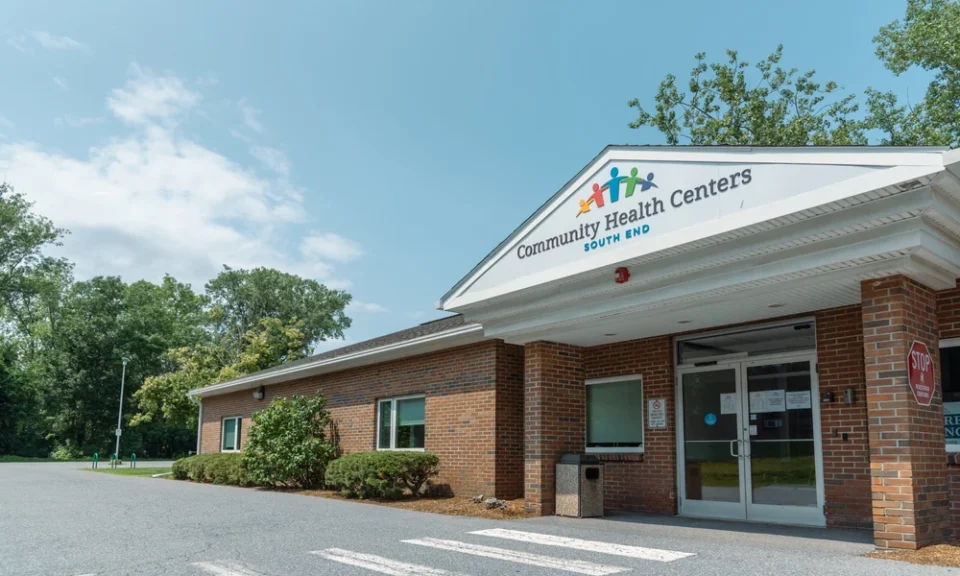
Sixty years ago, two small clinics opened their doors in some of the most underserved corners of the country, and almost nobody noticed. Today, their descendants serve roughly 34 million patients across more than 17,000 locations, according to the National Association of Community Health Centers’ 2024 data report. That growth did not happen by accident. It happened because a handful of public health advocates, federal lawmakers, and local communities refused to accept that geography or income should determine whether a person gets quality care. This is the story of how they built something that now touches one in nine Americans.
A War on Poverty That Built Clinics
The community health center movement was born inside President Lyndon Johnson’s broader War on Poverty. When Congress passed the Economic Opportunity Act in 1964, most people focused on job training and education. But a small group of physicians and social reformers, led by Dr. H. Jack Geiger and Dr. Count Gibson at Tufts University, pushed for something more concrete: neighborhood health centers that put doctors where poor people actually lived.
The first two opened in 1965. One was in Mound Bayou, Mississippi, a rural town where sharecroppers had almost no access to care and where the poverty rate hovered at levels that would shock most Americans today. The other was at Columbia Point in Boston, a public housing project that sat less than four miles from some of the best hospitals in the world, yet might as well have been in another country for how reachable those hospitals were to its residents. Both clinics treated patients regardless of ability to pay, connected families to social services, and hired from the communities they served. That last piece was not a nice-to-have. It was the design.
The results were dramatic enough that Congress took notice. By 1975, the federal government had formalized the Community Health Center program under Section 330 of the Public Health Service Act, creating a dedicated funding stream and a legal identity that would eventually evolve into what we now call Federally Qualified Health Centers, or FQHCs.
The CARE Arc: Four Phases That Shaped What These Centers Are Today
If you want a mental model for how community health centers got from two pilot clinics to a national institution, think of what I call the CARE Arc: Community roots, Access expansion, Reform integration, and Era of consolidation. Each phase built on the last, and each one changed what the centers could offer.
Community roots (1965 to 1975) were exactly what they sound like. Centers operated as genuine neighborhood institutions, often co-designed with the people they served. Boards of directors were required to include patients. That governance structure remains legally mandated today.
Access expansion (1975 to 1995) saw the federal program grow steadily through Democratic and Republican administrations alike, because it was genuinely hard to argue against cheap, effective primary care. The Reagan era brought real budget cuts and consolidation, but the program survived and actually broadened its geographic reach into rural areas that had never had a local doctor, let alone a clinic.
Reform integration (1995 to 2010) is where things got complicated. Managed care became the dominant insurance model, and community health centers had to figure out how to operate inside a system designed for fee-for-service private practice. Many expanded their service lines, adding dental, behavioral health, and pharmacy under one roof, partly out of mission and partly because diversification was the only way to stay financially viable.
Era of consolidation (2010 to present) brought the Affordable Care Act and a significant funding boost through the Health Center Fund. Enrollment jumped. Services broadened further. Telehealth entered the picture in a serious way. And the centers that once looked like last resorts started winning quality awards next to private physician groups.
What These Centers Actually Deliver
The scope of services at a modern community health center would surprise most people who still picture a stripped-down free clinic. Walk into a well-run FQHC today and you will often find primary care, dental, vision, behavioral health, pharmacy, and nutrition support programs all under one roof or tightly coordinated across locations.
One of those programs is WIC, the federally funded nutrition assistance program that serves pregnant women, new mothers, infants, and children under five. According to the USDA’s Economic Research Service, WIC served about 6.7 million participants each month in fiscal year 2024, including an estimated 41 percent of all infants in the United States. That scale is possible because local health centers act as delivery points for the program, embedding WIC inside primary care settings where families already come. The WIC program in Ohio, for example, operates through community health organizations like Primary Health Solutions, which coordinates WIC alongside primary care, dental, and mental health services for Butler County and Dayton residents.
The data in the table below shows how the patient base has grown over the past several decades as the federal program expanded.
| Year | Approx. Patients Served | Notable Policy Context |
|---|---|---|
| 1975 | ~1 million | Section 330 formally established |
| 1990 | ~5 million | FQHC designation and Medicaid cost-based reimbursement |
| 2010 | ~19 million | ACA Health Center Fund created |
| 2024 | ~34 million | Historic enrollment milestone (NACHC, 2024) |
The Governance Rule That Keeps Centers Honest
Here is something most people do not know about community health centers: at least 51 percent of each center’s governing board must be made up of active patients. Not community representatives. Not local business leaders. Patients. People who actually use the clinic.
That requirement is easy to gloss over, but it changes everything about how decisions get made. When a board has to vote on clinic hours and more than half the room is people who depend on those hours to fit around a work schedule or a bus route, you get different outcomes than you get from a boardroom of executives. You get Saturday hours. You get telehealth before it was trendy. You get a pharmacy on-site because patients kept asking why they had to go across town to fill a prescription.
“Health centers are physician-led but patient-driven, which is a genuinely unusual combination in American medicine.”
That framing, widely shared among FQHC policy researchers, captures something real. The patient board requirement is not a checkbox. It is the philosophical core of the whole model, and it is the reason community health centers kept adding services that met actual need rather than optimizing around profitable procedures.
What Still Needs to Change
None of this means the system is finished. Funding uncertainty remains the biggest operational challenge. When federal health center grants are threatened or when Medicaid enrollment drops, centers face immediate revenue gaps that hit the most vulnerable patients hardest. The 2024 data from KFF showed that uninsured health center patients increased by over 250,000 from 2023 to 2024, a trend almost entirely explained by Medicaid unwinding policies.
Staffing is the second persistent pressure. The centers that were designed to serve underserved areas naturally sit in markets where recruiting physicians is difficult. Loan forgiveness programs through the National Health Service Corps help, but demand consistently outpaces supply in rural and peri-urban zones.
Still, the trajectory since 1965 is hard to argue with. Two pilot clinics in Mississippi and Boston set a model that has lasted six decades, survived political shifts in both directions, and grown into one of the most cost-effective delivery systems in American medicine. The history is worth knowing not because it is inspiring in a vague way, but because understanding where these centers came from explains why they work the way they do and why they are worth protecting.
If you want to see what a modern community health center looks like in practice, find your nearest FQHC and book a visit. Ask about what services run under that roof. The answer will probably surprise you.
